Creating an event

Creating an event happens in two passes. The first screen asks only when, where and who hosts it; the title and the description come on the edit screen right after, because those exist once per language.

Where the form lives

In the admin area, Events under Content lists everything your group has scheduled. The plus in the header of the last column opens Create New Event. Both the list and the form are behind the organizer role - a plain member never sees them.

From nothing to a published event

  1. 1

    Open Create New Event

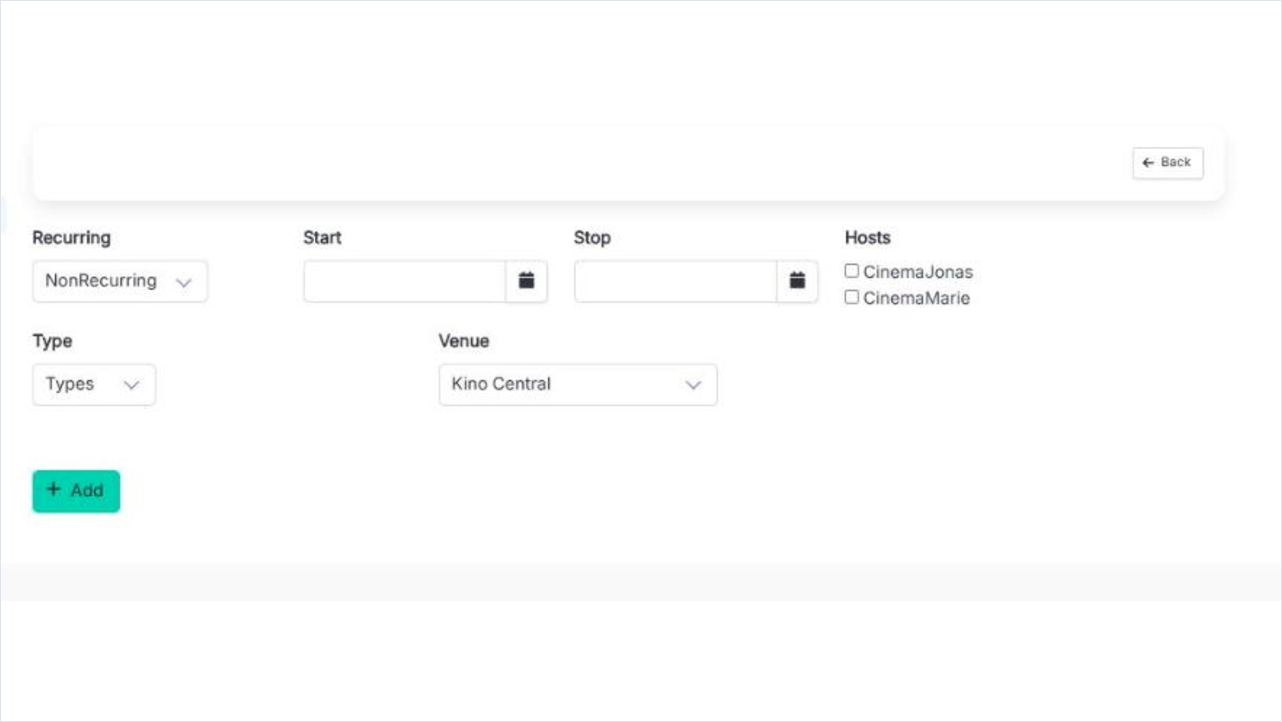
    The short form: start and stop, an optional recurrence, a type, a venue and the hosts. There is deliberately no title field here yet.

  2. 2

    Save

    The event is created and you land straight on its edit screen. Nothing is public yet - a new event starts as a draft.

  3. 3

    Write the title and the description

    The edit screen grows one set of title, description and teaser fields per language your group has active. This is the pass the first screen could not do.

  4. 4

    Add the preview image

    A 16:9 image up to 5 MB. It is what shows in the list and in link previews when someone shares the event.

  5. 5

    Set the status to published

    Status is what makes the event visible. Until you change it, only organizers see the event.

The Create New Event form, with the start and stop date-time fields, the recurrence dropdown, the type and venue selectors and the host checkboxes.
Create New Event asks when, where and who - the text comes on the next screen.

Every field on the event form

Status
Draft, Published or Locked. Only Published is visible to members and visitors. The field is on the edit screen only - a new event is always created as a draft.
Featured
Yes or No. A featured event is collected on the Featured page, which is a curated look back rather than a promotion slot in the main list. Edit screen only.
Start / Stop
The date and time the event begins and ends, as one combined picker each. For a recurring series these set the pattern's first occurrence.
Type
Regular, Outdoor or Dinner, or left empty. It is what the Type filter on the public events page matches against.
Venue
The place, picked from the venues your group has. The list ends in "+ Add new venue", which opens a small dialog so you do not have to leave the form.
Hosts
Checkboxes, more than one allowed. Hosts are the people to ask on the night; they are shown on the event page and are managed under Hosts.
Preview Image
Up to 5 MB, ideally 16:9. Edit screen only. Without one the event still works, it just has nothing to show in a link preview.
Recurring
Empty means NonRecurring. Otherwise Daily, Weekly, Every 2 weeks, Monthly, Yearly, or Custom for a rule you build yourself. Recurring events has the detail.
Series name
The name of the whole series, not of one evening. Only meaningful once a recurrence is set.
title (%locale%)
One per active language. This is the event's name in the list and on its own page.
description (%locale%)
One per active language, in a rich-text editor. The full text of the event page.
Teaser (%locale%)
Two lines per language. The short version used where the full description does not fit.
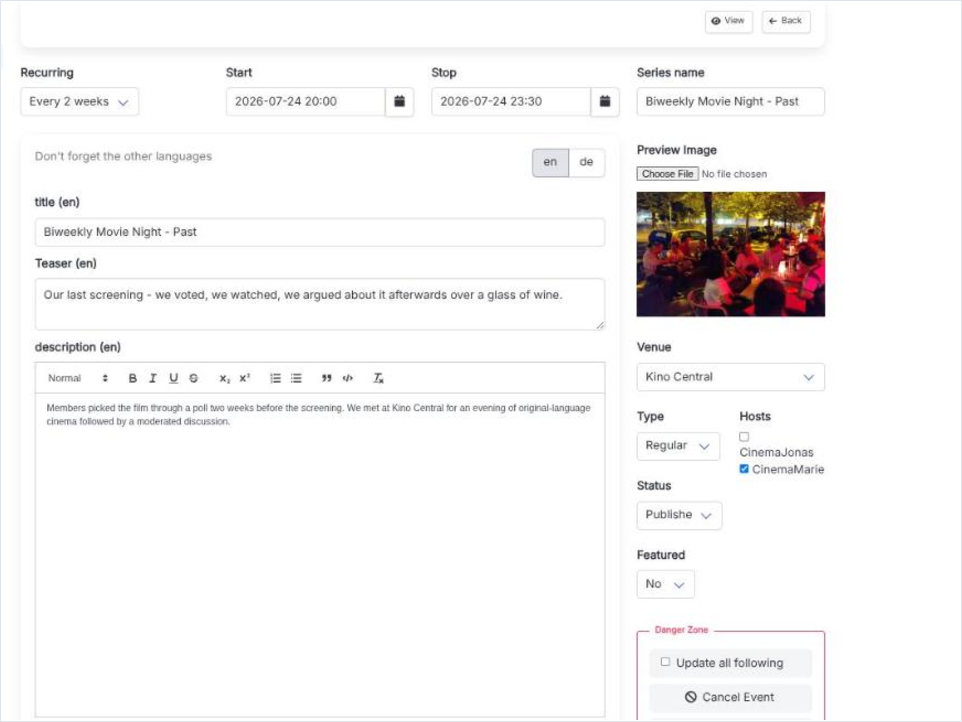
The event edit screen: the language buttons above the title, teaser and description fields on the left, and the preview image, venue, type, status and featured selectors down the right.
The edit screen: the same event, plus everything that exists once per language.

The other languages are easy to forget

The form says so itself. A language with no title falls back to nothing, so a member reading in that language sees an event with no name. If you are not going to translate, keep the language list short - see Languages.