Organizing a regular Stammtisch
The same evening, the same place, the regulars and a few new faces. Here is how to keep it going without doing the same work every week.
What makes a Stammtisch last
A fixed rhythm, a venue that expects you, and one person who keeps the table booked. Everything else - who comes, who is new, who brings what - should not take a dozen chat messages each time.
Whether it is a language Stammtisch, an English-speaking regulars' table or a neighbourhood evening, the steps are the same.
The usual way
- Asking in the chat every week who is coming
- Newcomers who cannot find you without an invite
- One person who has to remember everything
With a page for it
- ✓Dates that create themselves
- ✓A head count before you book the table
- ✓A public page newcomers can find
Five steps
Give it a page
A name, a short description of who it is for, and the languages you speak - for a language Stammtisch, every page and every event can be written in each of them. Newcomers can find the page, read it and simply turn up, without an account.
Add a photo of the venue or the table, so a first-timer knows what to look for when they walk in. The page goes live once the application is approved and the balance is topped up; new members wait for your approval until you switch that off.

Pick a rhythm
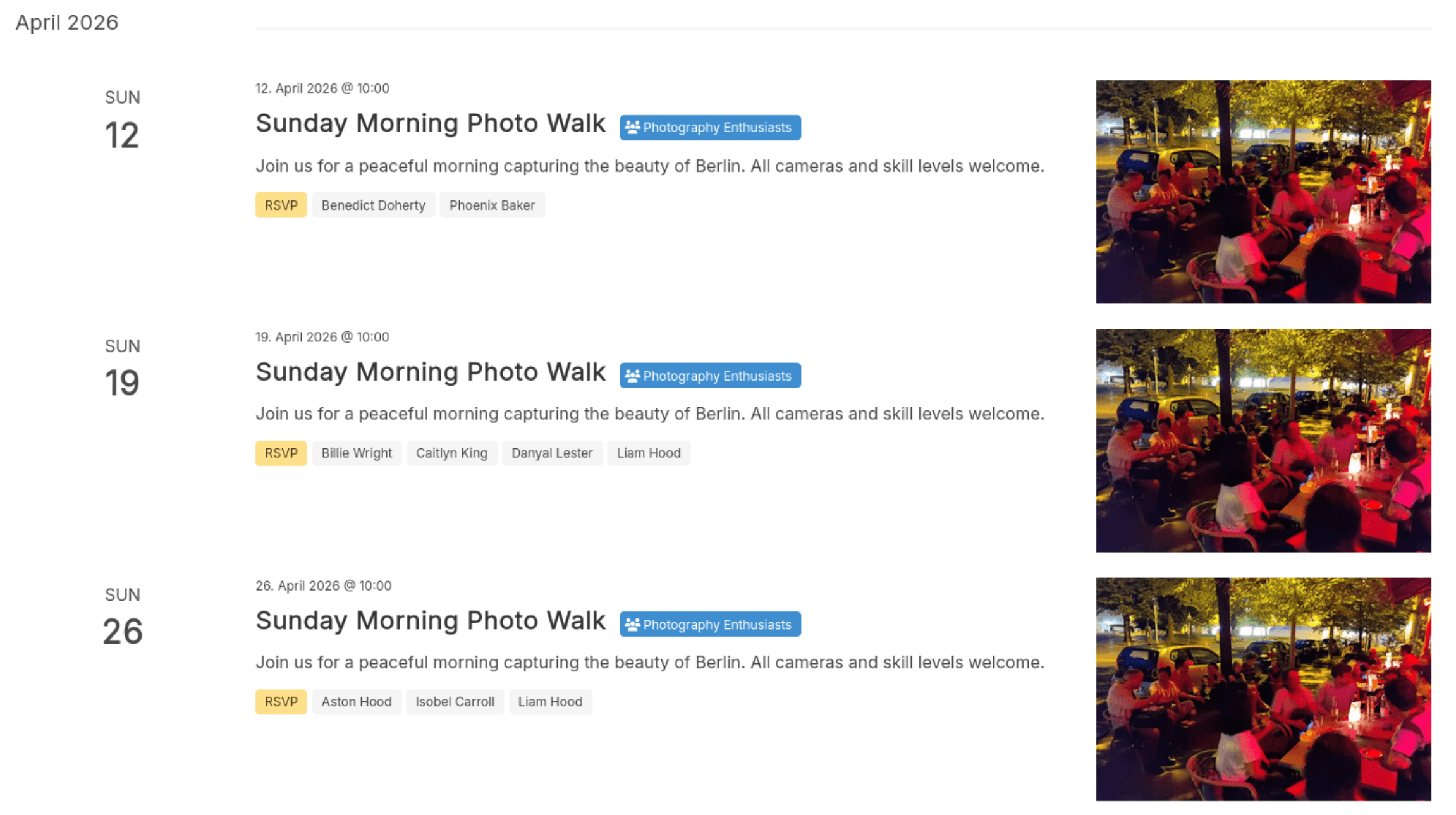
Every Thursday, every second Tuesday or every first Wednesday of the month - one rule creates every date, months ahead. The rule is shown as a plain sentence, so the regulars and the venue get the same answer to "when is it again?".
A fixed rhythm is what keeps a Stammtisch alive: people stop asking and start coming. If the pub is closed one week, cancel that one date - everyone who said yes gets an email, and the rest of the series stays as it is.
Save your venue
Enter the pub or café once, with address, a short description and its place on the map, and every event points to it. Correct the address once and every date shows the new one.
Use the description for what newcomers need: the table at the back, the name on the reservation, the little flag on the table. Members who switch on maps see the venue on OpenStreetMap right on the event page.

Let people say yes
One click to RSVP, and the names appear on the event page - newcomers see that real people are coming, which is often what gets them through the door. Anyone bringing a friend adds them as a guest.
You see the head count before you call the venue, so you book a table for eight instead of guessing. If plans change, people take their RSVP back with the same button.

Remind them
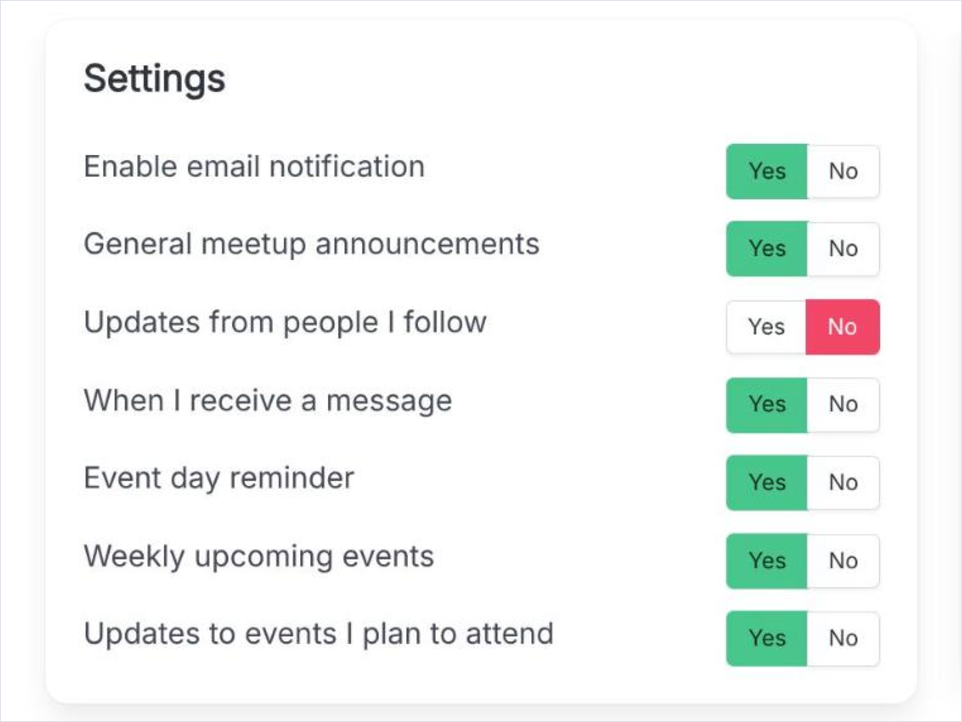
Members choose their emails: a reminder on the day, a weekly overview of what is coming up, a note when an event they said yes to changes. Nobody has to post "reminder: tonight!" in a chat again.
Those who live by their calendar subscribe to the group's calendar feed instead, and every date appears there on its own. Give a co-organizer the rights too, so the Stammtisch keeps going while you are on holiday.
Questions organizers ask
Does it cost anything?
€6.00 a month for the whole group, paid in advance - shared among the regulars, it is less than a drink each. Members and guests never pay.
Can people come without signing up?
Yes. They can read the page and simply turn up; an account is only needed to RSVP.
Can several people organize it?
Yes. Give co-organizers rights, so the Stammtisch does not depend on one person.
Can it be in several languages?
Yes. The page and every event can be translated, which suits a language Stammtisch.